 Yameiju
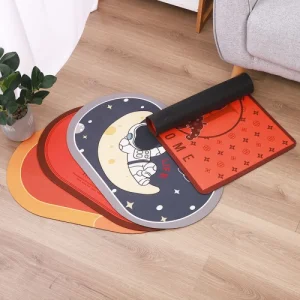
Four core indoor matting lines engineered for hotels, beachfront resorts, retail frontages and residential interiors in Mulifanua and the wider Samoan archipelago. All products are factory-direct with retained source links.
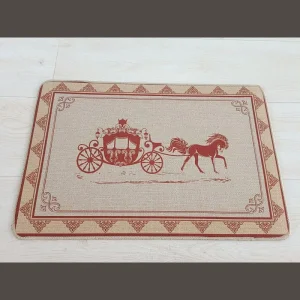
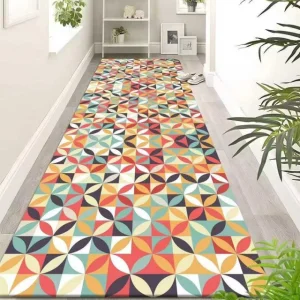
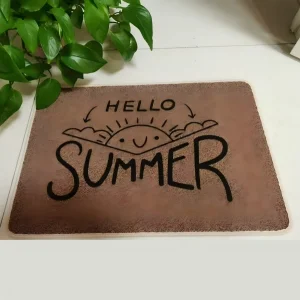
Understanding the local trading, hospitality and construction dynamics that shape indoor mat procurement on the western coast of Upolu, Samoa.
Mulifanua sits on the northwestern tip of Upolu in Samoa and functions as the country's principal international gateway through Faleolo International Airport. That single geographic fact reshapes the entire indoor mats supply chain for the region. Because Mulifanua is a transit hub connecting Apia, the offshore islands and outbound Pacific routes, the market demands products that survive tropical humidity, resist mould colonisation and are light enough to be freighted economically inside mixed container loads.
Local commercial activity in and around Mulifanua is dominated by three buyer archetypes: hospitality operators servicing airport-adjacent transit hotels and beach fale resorts; retail and hardware distributors reselling into Apia and Savai'i; and residential developers building cyclone-resilient homes that require non-slip wet-area flooring. Each archetype evaluates indoor mats against a different scorecard — hospitality buyers prioritise launderability and appearance retention, distributors prioritise pallet economics and MOQ flexibility, and residential buyers prioritise grip performance on tiled floors during the rainy season.
Samoa's climate delivers sustained relative humidity above 75% for much of the year, with a defined wet season between November and April. Standard PVC-backed mats sourced without anti-microbial treatment can develop odour and delamination within two seasons. For Mulifanua buyers, the practical specification hierarchy is therefore: TPR or rubber backing with drainage-capable pile height, machine-washable face yarns, UV-stabilised surface dyes, and a thickness profile between 2.5mm and 6mm that balances water absorption against door clearance.
Logistically, Mulifanua buyers operate on a consolidated-import model. Because direct full-container loads from Asia to Apia are limited in frequency, the majority of independent retailers in the region purchase through New Zealand and Australian wholesalers or participate in groupage shipments. This creates a clear competitive opening: factory-direct Chinese suppliers who can support low MOQ, mixed-SKU cartons and consolidated pallet loading capture significant margin advantage over regional wholesalers, provided they understand the freight constraints into Faleolo and Apia Port.
For the hospitality segment specifically, Mulifanua's tourism recovery has driven refurbishment cycles in transit accommodation. Operators sourcing for entryways, bathroom zones and kitchen corridors increasingly specify the diatom and loop-pile formats shown above because they combine absorbency with a low-profile silhouette that does not obstruct thresholds — a critical detail where resort architecture uses open-air transitions between interior and covered exterior space.
The worldwide floor-covering and matting sector is undergoing a materials transition — away from commodity PVC toward TPR, rubber and natural-fibre composites.
Globally, the indoor matting category has moved decisively out of the low-specification commodity tier. Buyers in Europe and North America now routinely demand documentation covering slip resistance, phthalate content, volatile organic compound emissions and recycled-material content. This regulatory pressure has cascaded into Pacific and Oceanian procurement, because retailers importing into New Zealand and Australia must satisfy compliance regimes that then propagate to their Samoan resale customers.
Three structural shifts are reshaping global supply. First, substrate migration from PVC to TPR (thermoplastic rubber) is accelerating because TPR delivers superior dimensional stability in humid environments while supporting cleaner recycling pathways. Second, short-cycle customisation has become a baseline expectation: retailers want private-label printed surfaces, custom dimensions and branded packaging at MOQs that were unthinkable a decade ago. Third, freight-aware design — compressible pile structures, roll-vs-fold decisions, and carton dimensions optimised for pallet fill — has become a genuine competitive differentiator as ocean freight volatility persists.
For Mulifanua-area buyers, these global shifts translate into opportunity. Products designed for the compliance-heavy European market inherently exceed local requirements, meaning a buyer specifying TPR-backed, machine-washable matting gains a product that resists tropical conditions by default rather than by special order.
Why Chinese mat manufacturing clusters deliver measurable cost and lead-time advantages over regional wholesalers for Mulifanua procurement.
Leading Chinese factories control yarn extrusion, backing compounding, tufting, printing and finishing under one roof — compressing lead times and eliminating inter-supplier quality drift.
Multi-line facilities with eight-figure annual square-metre capacity absorb peak-season surges without allocating Pacific orders to the back of the queue.
Established relationships with freight forwarders serving Apia Port and Faleolo enable mixed-container consolidation, cutting landed cost per unit significantly.
Digital printing and CAD-driven tufting allow Mulifanua retailers to launch own-brand mat ranges with minimal tooling investment and short sampling cycles.
Inspection protocols covering pile weight, backing adhesion, colour fastness and slip performance are increasingly standard — supplying retail-ready test reports.
Raw-material purchasing scale and automated finishing lines deliver factory-gate pricing that regional wholesalers cannot match once margin stacking is removed.
For Mulifanua importers, the practical consequence is a shorter and more transparent supply chain. Working directly with a factory removes at least one intermediary margin layer, shortens the sampling-to-production loop from months to weeks, and makes bespoke specification genuinely achievable at small order volumes. Because Mulifanua is served by consolidated freight rather than dedicated container services, factory partners who can hold stock, split cartons and sequence dispatch across multiple sailing dates add disproportionate value.
Mapping mat specification to the real interior environments found across the Mulifanua corridor and greater Upolu.


Transit hospitality. Airport-adjacent accommodation in Mulifanua sees constant trolley and luggage-wheel traffic. Specification should favour loop-pile entry matting in the 5.5–6mm range with anti-slip TPR backing, sized to cover the full threshold width so foot traffic cannot bypass the mat.
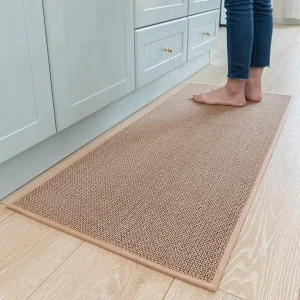
Kitchen and wet zones. Commercial kitchens and residential wet areas in Samoa face standing water and high ambient humidity. Diatom-based bathmats and linen-look kitchen runners in 2.5–3.5mm profiles dry rapidly, resist mould and provide a secure grip on glazed tile.
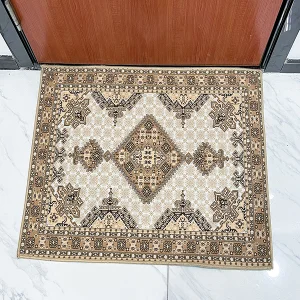
Retail frontage. Hardware and grocery retailers along the Mulifanua–Apia route benefit from dirt-trapper polyester door mats that capture red volcanic soil before it penetrates the shop floor — reducing cleaning labour costs measurably.
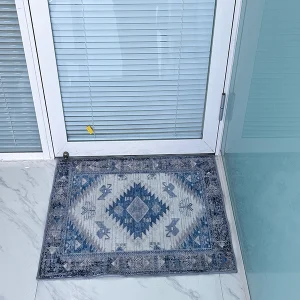
Residential interiors. Cyclone-resilient homes increasingly use washable low-pile rugs and faux-wool area rugs in living and dining zones, chosen for easy laundering after the muddy season and for acoustic softening in open-plan interiors.
Six trends with direct implications for Mulifanua distributors, hospitality buyers and residential specifiers.
Recycled-content backing and low-VOC formulations move from premium niches to mainstream buyer checklists.
Machine-washable formats are displacing spot-clean-only products across residential and hospitality segments alike.
TPR and hybrid rubber backings continue to displace PVC on performance and compliance grounds.
Factory-direct e-commerce and small-batch private label are compressing traditional wholesale layers.
Compressible pile and optimised carton geometry reduce landed cost as ocean freight remains volatile.
Digital product passports and traceable supply chains increasingly inform B2B purchasing decisions.
What multinational and regional buyers now demand from indoor matting suppliers — and how Mulifanua purchasers benefit from those raised standards.
Enterprise procurement teams at hotel groups, facility-management firms and retail chains have standardised their matting specifications around a consistent framework. That framework is worth understanding even at small regional scale, because it defines the baseline quality that Mulifanua buyers should expect.
Compliance documentation is now table stakes: slip-resistance test data, fibre-content declarations, and where applicable, fire-performance ratings. Batch consistency ranks alongside price — enterprise buyers audit colour and pile weight across shipments, and suppliers unable to hold tolerances are removed from approved-vendor lists. Commercial flexibility matters as much as manufacturing capability: staggered delivery schedules, vendor-managed inventory, consignment stock for large hospitality rollouts and drop-ship to multiple sites are all routine expectations.
Perhaps most relevant to the Mulifanua context is the growing emphasis on total cost of ownership. Enterprise purchasers now model matting costs across a full replacement cycle, factoring laundering frequency, expected service life and disposal. A slightly higher factory-gate price for a mat that survives three tropical seasons instead of one is, on that model, the cheaper choice — and it is the same conclusion an astute Mulifanua distributor will reach when planning annual stock rotation.
Eight additional factory-direct matting formats — runners, area rugs, entrance mats and washable carpets — available for consolidated shipment to Samoa.
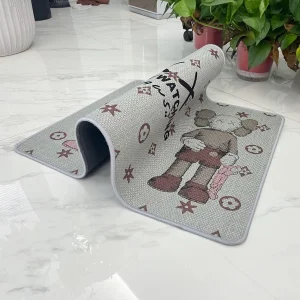
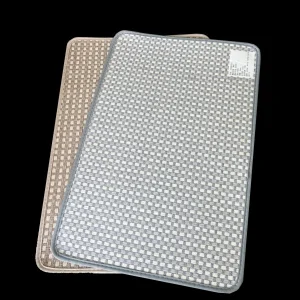
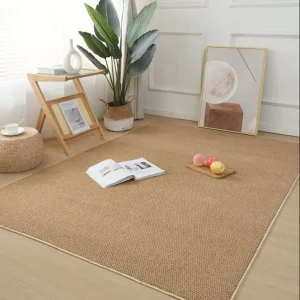
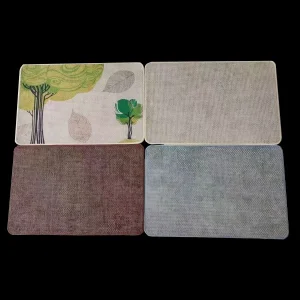
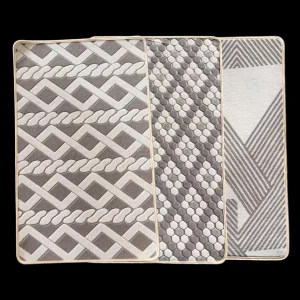
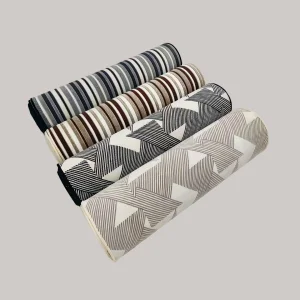
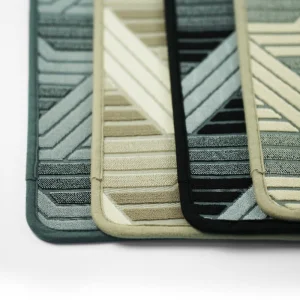
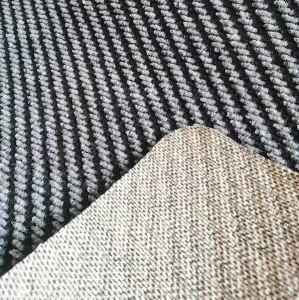
Remaining formats in the factory catalogue, suited to residential and light-commercial interiors across Mulifanua and Upolu.

A manufacturing partner supplying artificial turf and indoor matting to buyers across Asia-Pacific, including the Mulifanua and wider Samoan market.
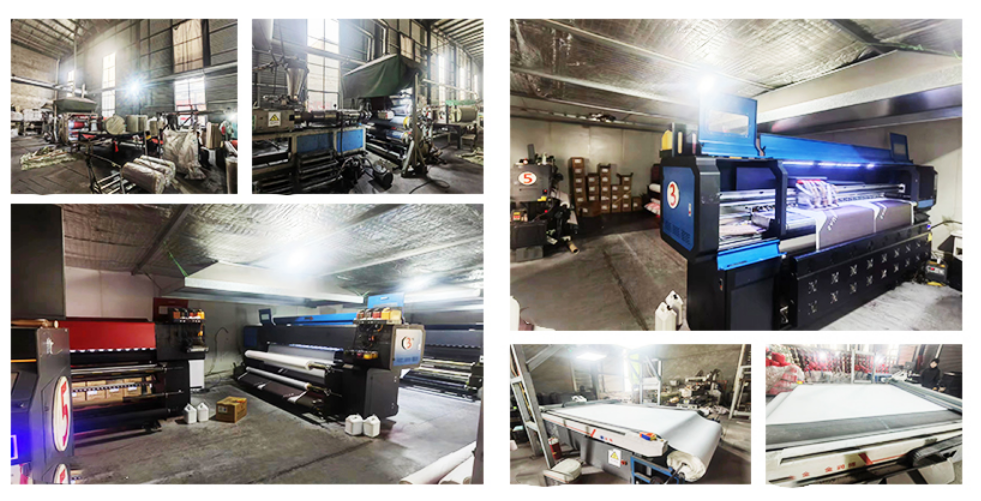
Welcome to Linyi Yameiju Artificial Turf Co., Ltd. — referred to as Yameiju Turf — an enterprise dedicated to the development, production and sale of artificial turf and matting products. As a product-specialist company, we are committed to delivering the highest quality to our customers.
Yameiju Lawn is located in Linyi City, Shandong Province — the logistics capital of China — a modern industrial city with a developed economy and convenient transportation. Situated in Luozhuang District, the company operates within a superior environment for sustainable technological and economic development, supported by a team of highly qualified specialists.
Growing demand for versatile, low-maintenance alternatives to natural turf, with matting formats that transfer directly into Mulifanua's interior environments.
Artificial turf is in growing demand as a versatile and low-maintenance alternative to natural turf. Whether you require a residential lawn, a sports field or a lawn for a commercial space, a variety of options exists to suit every requirement. Our team of experts works continuously to innovate and improve products, ensuring customers receive the most authentic, durable and eco-friendly artificial turf on the market.
Carpet-style artificial turf beautifies environments while breaking with traditional greening models and redefining expectations for green spaces. A closer look at how this innovation works in practice...
View more >>Site selection and infrastructure are crucial. A football field should generally be constructed in an area with ample sunlight, fresh air, elevated terrain and good drainage, on a foundation of cement, asphalt or cement-stone powder soil...
View more >>What sets Yameiju Turf apart is a commitment to product quality and customer satisfaction. The company adheres to strict quality control measures and uses only the finest materials and advanced manufacturing techniques to produce the full range of artificial turf and mats. Products are designed to deliver exceptional performance, longevity and aesthetics — the perfect solution for a beautiful, worry-free living or working environment.
Furthermore, we are proud of our team of dedicated professionals who are always ready to provide the highest level of customer service. From helping you choose the right product to answering any questions, the team is on hand to make every experience at Yameiju Lawn unrivaled. We know that every project is unique, and we take pride in providing personalised solutions that best meet specific needs and budgets. Choose Yameiju Lawn and experience the beauty, durability and excellence of our products.
Practical answers for distributors, hospitality buyers and specifiers sourcing indoor matting for the Mulifanua market.
Speak directly with the factory. Request samples, confirm MOQ, discuss private-label options and plan consolidated freight into Apia Port.
Send Inquiry Now