Why Choose Grass Lawn Mats for Global Landscaping Projects?

Time:2026-10-16 Author:Ethan
0%

Why Choose Grass Lawn Mats for Global Landscaping Projects?

Grass Lawn Mats offer a practical surface solution for projects facing different climates, soil conditions, and maintenance capabilities. They can create an immediate green appearance around resorts, public gardens, housing developments, sports areas, and transport facilities. Their value is not limited to visual appeal. Properly selected mats may reduce exposed soil, support surface stability, and simplify early-stage landscape management.

Landscape engineer Daniel Reyes, who advises international turf installation teams, explains, “The best lawn mat is chosen for the site, not for the brochure.” This principle matters across borders. A mat designed for humid coastal soil may fail in a dry continental region. Tropical heat, winter frost, drainage pressure, and heavy foot traffic all require different specifications. Installation teams must examine backing materials, root development, irrigation access, and local soil preparation before ordering large quantities.

Small details matter. A prepared base should be firm but not sealed. Water must move away after heavy rain. Edges need secure joining, especially beside paths and sloped ground. Experienced contractors also check the mat’s weight, roll dimensions, storage conditions, and delivery route. These factors can influence labor costs and installation timing.

No product is perfect. Grass Lawn Mats may need careful watering, trimming, and replacement in stressed areas. Poor preparation can create uneven growth. That is worth admitting. Still, when matched to local conditions and installed by trained professionals, they can provide a consistent, efficient foundation for responsible landscaping projects worldwide.
Why Choose Grass Lawn Mats for Global Landscaping Projects?

What Are Grass Lawn Mats and How Do They Work?

Grass lawn mats are pre-grown or pre-seeded layers that establish turf across prepared soil. They may contain living grass, roots, growing medium, and biodegradable backing. Some versions arrive as rolled sod. Others carry seed and need watering before germination.

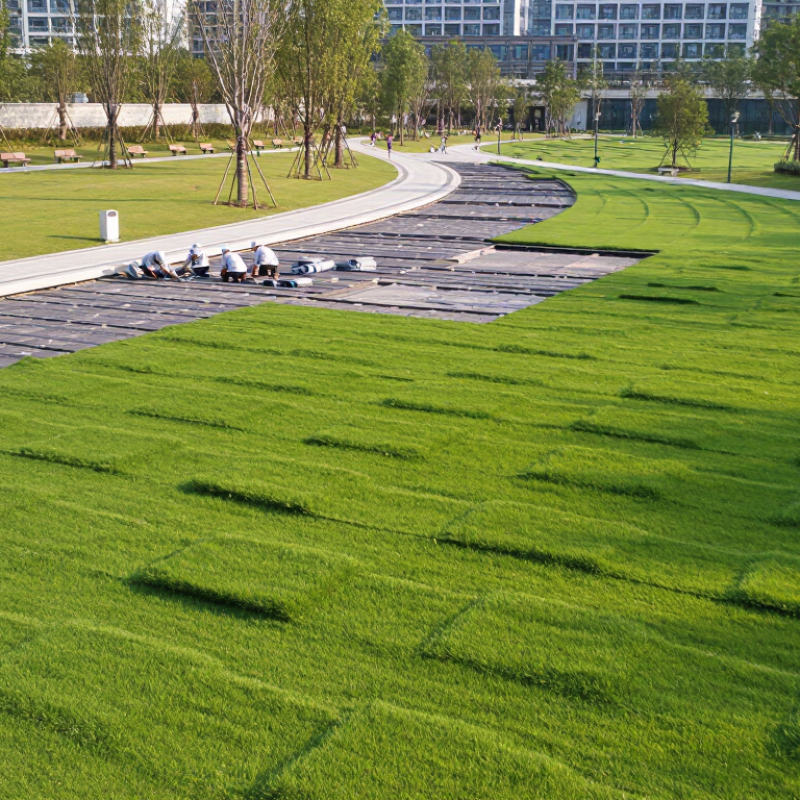
The working process is simple. Contractors level the soil, remove stones, and improve drainage first. They then unroll the mat, press its edges together, and water it deeply. Roots grow into the ground and gradually bind the surface. This can reduce bare-soil erosion on slopes, roadside verges, and public parks. Field installers often add pins on windy sites. Small gaps still matter. They can dry faster than the surrounding turf.

Water planning remains important. FAO AQUASTAT reports that agriculture accounts for roughly 70% of global freshwater withdrawals. Landscape irrigation should therefore match local rainfall and soil conditions. The U.S. Environmental Protection Agency also notes that outdoor watering can represent nearly 30% of household water use, with substantial losses from evaporation and runoff. A lawn mat may shorten establishment time, but it cannot correct poor drainage or unsuitable grass selection. That is where projects sometimes fail.

Professional specifications should consider climate zone, foot traffic, soil depth, and maintenance access. Biodegradable backing can support early stability, yet its breakdown rate varies with moisture and temperature. Contractors should request test data, installation guidance, and local performance records. The evidence is useful, but not perfect. Long-term monitoring still deserves more attention.

Key Benefits of Grass Lawn Mats in Landscaping Projects

Why Choose Grass Lawn Mats for Global Landscaping Projects?

Grass lawn mats offer practical benefits for landscaping projects across different climates and site conditions. They provide fast ground coverage, which helps reduce exposed soil after construction. Their woven structure can support erosion control on gentle slopes and around drainage channels. Installation is also more predictable than seeding, especially where wind, birds, or heavy rain could disturb loose seed. A finished surface appears sooner, helping public parks, housing areas, and commercial sites open with less visual disruption.

From a project management perspective, lawn mats can simplify scheduling. Crews usually need fewer visits for initial establishment, although watering remains essential. Mats can also improve moisture retention when placed over properly prepared soil. However, they are not a universal solution. Poor grading, compacted soil, or unsuitable grass varieties may cause weak rooting. I have seen attractive installations fail because drainage was ignored. That mistake is easy to repeat.

Tips: Test the soil before installation. Match the grass type to sunlight, rainfall, and expected foot traffic. Keep the surface evenly moist during rooting, but avoid standing water. Secure edges and seams on windy sites. Inspect weekly during the first month. Small gaps matter.

Why Choose Grass Lawn Mats for Global Landscaping Projects? - Key Benefits of Grass Lawn Mats in Landscaping Projects

Project Consideration Grass Lawn Mats Conventional Seeded Lawn Landscaping Value
Visible green coverage Immediate coverage after installation Gradual coverage during germination and establishment Improves the appearance of residential, commercial, and public spaces quickly
Typical establishment period Usually about 2–4 weeks with suitable watering and site preparation Often about 6–12 weeks, depending on seed type, weather, and soil conditions Helps shorten the period between installation and normal landscape use
Soil erosion control Provides a planted surface that helps reduce raindrop and surface-flow impact immediately Limited protection until seedlings emerge and form adequate ground cover Useful for slopes, embankments, drainage edges, and areas exposed to rainfall
Installation window Can generally be installed during a wider seasonal window when the ground is workable More sensitive to seed germination temperature, rainfall, and wind conditions Supports scheduling flexibility across different climate zones
Early weed competition Established turf cover can reduce open soil where weeds may emerge Bare soil between emerging plants can provide more opportunities for weed growth May reduce early-stage hand weeding and improve visual uniformity
Watering requirements after installation Requires frequent, shallow watering initially; frequency can decrease as roots establish Requires consistent moisture for germination and continued seedling development Allows irrigation planning based on local rainfall, soil, season, and grass species
Surface stability Interlocking roots and the mat layer help stabilize the soil surface after rooting Soil remains more exposed during the early growth stage Suitable for projects where reducing surface disturbance is important
Visual uniformity Produces relatively consistent coverage when rolls or mats are properly aligned Coverage may be uneven because of seed distribution, runoff, birds, or variable germination Supports clean visual standards for parks, pathways, courtyards, and showcase landscapes
Maintenance during the first month Focuses mainly on watering, seam management, light rolling, and avoiding heavy traffic May require watering, reseeding thin areas, weed monitoring, and protection from runoff Can simplify early maintenance on large or highly visible project sites
Best-fit applications Slopes, public lawns, residential gardens, sports surroundings, roadside areas, and erosion-sensitive sites Large open areas where lower initial material cost and longer establishment time are acceptable Enables selection of the installation method according to budget, schedule, climate, and site risk

Note: Time ranges are typical planning benchmarks rather than guarantees. Actual performance depends on grass species, climate, soil preparation, drainage, irrigation, installation quality, and post-installation care.

How Grass Lawn Mats Adapt to Different Climates and Terrains

Why Choose Grass Lawn Mats for Global Landscaping Projects?

Grass lawn mats adapt because their structure can be selected for local weather and ground conditions. In humid regions, open-weave mats improve drainage and reduce surface washout. In dry climates, denser mats help retain moisture around young roots. The FAO’s Status of the World’s Soil Resources reports that about 33% of global soils are moderately or highly degraded. That figure makes early erosion control more than a cosmetic choice.

Terrain changes the installation method. On a gentle garden slope, a biodegradable mat can stabilize seed and topsoil during germination. On a steep embankment, stronger anchoring, closer overlaps, and surface contact are essential. The USDA Natural Resources Conservation Service recommends matching erosion-control materials with slope, soil texture, runoff, and vegetation requirements. Small details matter. A loose edge can become a long tear after one storm.

Climate planning also needs harder evidence. The IPCC Sixth Assessment Report states that heavy precipitation events have increased across many land areas with reliable observations. Grass mats can slow runoff, but they cannot repair compacted soil or solve poor drainage alone. That assumption is often wrong. Field teams should inspect soil moisture, wind exposure, freeze-thaw cycles, and root depth before choosing a mat. In practice, installation timing may matter as much as the material itself. A well-designed system can still fail when placed over frozen ground or watered unevenly. Mistakes happen. Review them early.

Installation and Maintenance Requirements for Global Use

Grass lawn mats provide fast, even coverage for landscaping projects across different regions. However, successful installation depends on local soil, climate, and drainage conditions. Before delivery, inspect the site and remove stones, roots, and construction debris. Grade the surface carefully, then test drainage with a small water application. Standing water after several hours indicates a serious preparation issue. Use fertile, well-compacted topsoil, but avoid pressing it too firmly. Lay each mat tightly against the next one. Stagger the seams to prevent visible lines. Secure mats on slopes with biodegradable pins, where suitable. Water them within 30 minutes of installation.

Weather changes the maintenance plan. In hot, dry areas, install during cooler hours and provide frequent light irrigation. Humid locations need airflow and careful watering to reduce fungal problems. Cold regions may require temporary protection during severe frost. During the first two weeks, check moisture beneath the mats, not only on the surface. Trim gradually after roots establish. Cutting too short can expose weak areas, especially in unfamiliar climates. Field experience shows that rushed watering schedules often cause uneven rooting.

Tips: Confirm local rainfall records before installation. Prepare spare soil for low spots. Inspect seams after heavy rain. Keep foot traffic away until the mats resist gentle lifting. Maintenance plans should remain flexible. No site behaves perfectly. Record changes, even small ones, so future teams can adjust irrigation, mowing height, and repair timing with better evidence.

Factors to Consider When Selecting Grass Lawn Mats for a Project

Global landscaping projects demand more than an attractive surface. When selecting grass lawn mats, evaluate the climate, traffic level, drainage, and installation conditions. A coastal site may need strong UV resistance and corrosion-tolerant components. A dry inland project may require heat-stable fibers and secure edging. High-traffic areas need dense pile construction and stable backing. Children’s spaces also require reliable shock absorption and slip resistance.

Drainage deserves close attention. After heavy rain, water should pass through the mat without creating soft, flooded patches. Check the backing design, ground preparation requirements, and recommended drainage layer. Uneven soil can cause wrinkles, visible seams, and early wear. Field checks often reveal problems that product photos hide. Request technical data, warranty terms, maintenance instructions, and independent performance testing where available.

Project scale creates another practical challenge. Large rolls may reduce seams, but they can increase shipping weight and handling costs. Smaller mats are easier to place around trees, paths, and irregular borders. Confirm local fire, accessibility, environmental, and disposal requirements before ordering. I would not select a mat from appearance alone. No mat is perfect. Even a durable surface may need brushing, cleaning, and occasional seam repairs. Site teams should test a sample outdoors for several weeks, especially under direct sun and repeated foot traffic.

FAQS

How do grass lawn mats adapt to humid climates?

Open-weave mats allow rainwater to pass through and reduce surface washout. Good drainage matters.

Which mat structure suits dry climates?

Denser mats can help retain moisture around young roots. Heat-stable fibers may perform better in strong sun.

How should mats be installed on steep slopes?

Use stronger anchors, closer overlaps, and firm soil contact. A loose edge can tear after one storm.

Can grass lawn mats solve poor drainage?

No. They slow runoff but cannot repair compacted soil or blocked drainage. That assumption often fails.

What site conditions should teams inspect before installation?

Check soil moisture, wind exposure, slope, freeze-thaw cycles, drainage, and expected root depth.

How do traffic levels affect mat selection?

High-traffic areas need dense construction, stable backing, slip resistance, and reliable shock absorption.

Should a sample be tested before a large order?

Yes. Test it outdoors for several weeks under sunlight, rain, and repeated foot traffic. Samples still may not predict everything.

What maintenance might grass lawn mats require?

They may need brushing, cleaning, seam repairs, and periodic drainage checks. No mat is maintenance-free.

Conclusion

Grass Lawn Mats are pre-grown or pre-assembled turf systems designed to create a stable, attractive green surface quickly and efficiently. They can help control soil erosion, improve visual appeal, reduce dust, and support safer, more comfortable outdoor spaces. By providing an established layer of vegetation, Grass Lawn Mats are suitable for residential areas, public landscapes, sports spaces, commercial developments, and other large-scale projects where fast results and consistent coverage are important.

Their flexible structure allows them to adapt to different climates, soil conditions, slopes, and terrain types when the appropriate grass variety and mat design are selected. Successful global use depends on proper ground preparation, accurate installation, sufficient watering, drainage management, mowing, and routine fertilization. Project planners should evaluate climate, sunlight, rainfall, soil quality, traffic levels, maintenance capacity, transportation needs, and installation timing before making a selection. With careful planning and ongoing care, Grass Lawn Mats can provide a durable, practical, and visually appealing landscaping solution across diverse environments.


Ethan

Ethan

Ethan is a seasoned marketing professional with a deep expertise in our company's innovative product line. With a passion for sharing knowledge and insights, he takes the lead in regularly updating our corporate blog, where he explores industry trends, product features, and effective marketing......