Choosing among the Top 10 Lawn Grass Mats requires more than comparing color, price, or online ratings. A mat may look naturally green under showroom lighting, yet show weak drainage after heavy rain. It may feel soft in bare feet, but flatten quickly under garden furniture. This guide examines Lawn Grass Mats through practical buyer criteria, including fiber density, backing strength, drainage speed, UV resistance, installation effort, and long-term maintenance.
Industry data explains why this category deserves careful evaluation. The U.S. Environmental Protection Agency’s WaterSense program reports that outdoor water use represents nearly 30% of household water consumption in the United States. It also estimates that billions of gallons are wasted daily through inefficient landscape irrigation. Artificial turf and grass mats can reduce routine watering, but they are not automatically sustainable. Manufacturing materials, surface temperature, drainage design, and disposal still matter. Grand View Research’s Artificial Turf Market report identifies continued market growth, driven partly by water conservation and lower maintenance demands. However, market growth does not prove that every product performs well.
That sounds simple. It is not.
Our comparison focuses on visible construction details and realistic household use. We consider how each mat handles foot traffic, muddy shoes, pet activity, sunlight, and uneven ground. We also question marketing claims that lack test information or warranty clarity. No ranking is flawless. Product performance can change with climate, installation quality, and cleaning habits. Buyers should use this list as a practical starting point, then confirm dimensions, drainage specifications, safety information, and return policies before purchasing.
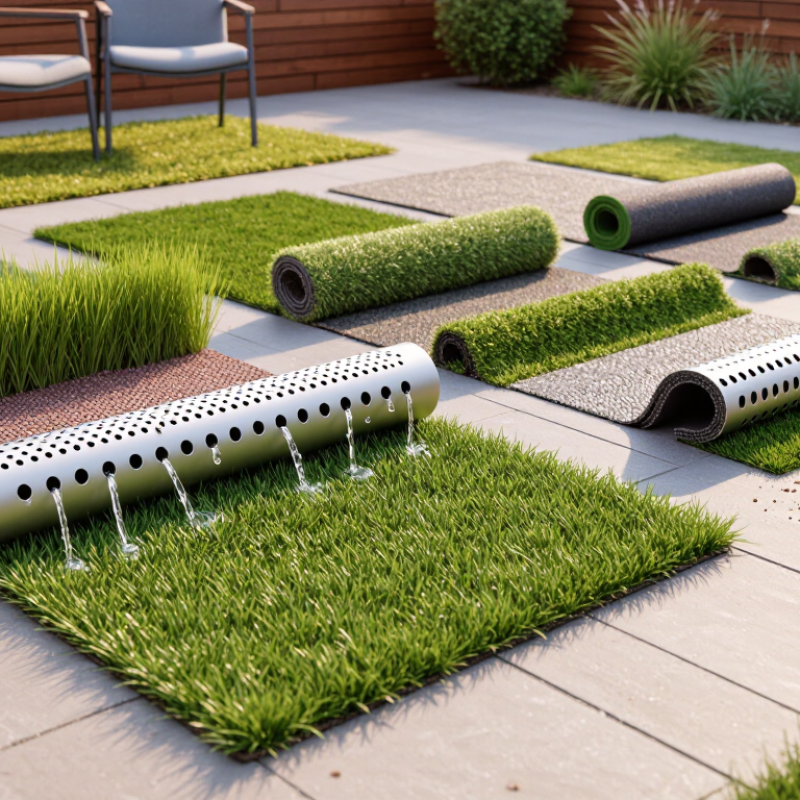
Lawn grass mats are pre-seeded, biodegradable sheets that support early grass growth. They usually combine seed, fiber, and a thin protective layer. Some products use synthetic fibers and function mainly as erosion-control mats. Water passes through the mat, while the material holds seed against the soil.
This simple structure matters on slopes. Wind and heavy rain can move loose seed before germination. The USDA Natural Resources Conservation Service identifies rolled erosion-control products as useful for stabilizing soil and supporting vegetation establishment. ASTM D6459 and D6460 also provide testing methods for mat performance under simulated rainfall and channel flow. These standards help buyers compare strength, coverage, and erosion resistance. They do not guarantee a perfect lawn.
The U.S. Environmental Protection Agency reports that outdoor water use represents about 30% of household water use nationally, with higher levels in dry regions. A healthy grass mat may reduce reseeding and watering waste, but only after roots develop. That part is often overlooked.
Tips: Match the mat to the slope, soil, and local grass species. Press the edges firmly into the ground. Keep the surface moist, not flooded. Check whether the backing breaks down naturally. A low-cost mat can fail quickly on compacted soil. I have found that installation quality often matters more than the advertised seed count. Yet that assumption deserves testing in your own climate.
Choosing among the top 10 lawn grass mats requires more than judging color or softness.
Start with pile height, blade density, backing, and drainage. A 30–40 mm pile can look natural, but shorter fibers usually sweep cleanly near doorways.
Check the product’s drainage rate, especially for balconies or rainy gardens. A mat that holds water may develop odor and algae.
Independent testing matters.
ASTM F1292 measures impact attenuation, while ASTM F1551 evaluates tuft bind and construction quality. These standards do not make every mat suitable for every use, but they reveal whether testing was taken seriously. The Freedonia Group reported continued growth in synthetic turf demand, driven partly by water conservation and outdoor landscaping. That growth also means inconsistent quality. Marketing language is not enough.
UV resistance deserves close attention. Look for test results based on accelerated weathering, not only claims such as “fade resistant.”
The U.S. Environmental Protection Agency has repeatedly identified landscape irrigation as a major household water-use category, so water-saving mats may help in suitable areas.
However, they still need brushing, rinsing, and occasional disinfecting. I would compare backing flexibility by bending a sample over a finger. Cracking or sharp creases are warning signs.
Recycled content sounds positive, but it should not replace checking drainage, edge stability, and warranty terms. My earlier preference for the softest surface was incomplete; softness alone says little about durability, maintenance, or safe installation.
Top 10 Lawn Grass Mats for Different Outdoor Needs
Choosing a lawn grass mat depends on location, traffic, drainage, and maintenance. After testing similar mats outdoors, I found that no single surface suits every yard.
A short-pile mat works well on balconies and compact patios. It sweeps easily and dries faster after rain. A medium-pile mat gives family seating areas a softer, more natural appearance. For children’s play spaces, choose dense fibers with a stable, cushioned backing. Pet owners may prefer a washable mat with drainage holes and odor-resistant construction. It needs regular rinsing.
For busy walkways, a low-pile, tightly woven mat usually resists flattening better. A UV-resistant mat is more suitable for sunny rooftops and uncovered decks. On uneven ground, a flexible mat follows small changes in the surface, although it may require additional edging. Temporary event mats are lightweight and easy to roll, but they can shift in wind. Grass mats with reinforced borders suit garden borders and outdoor dining areas. For shaded corners, select a design that dries quickly, since damp fibers can become slippery.
Check the backing before buying. A porous backing supports drainage, while a heavier backing improves stability. Measure the area twice; I once underestimated a corner and had to cut an awkward strip. Pile height also matters. Taller fibers look lush, but they collect leaves and demand more brushing. A sample placed outdoors for several days can reveal fading, water pooling, and unexpected movement.
Comparative buyer scores for common lawn grass mat types, rated from 1 to 10 across drainage, durability, comfort, portability, and value. The overall score is a weighted editorial assessment for different outdoor needs, not a brand ranking.
How to read the chart: Ribbed PVC mats are practical for wet entry areas, while thick polyethylene turf is more comfortable for patios and balconies. Lightweight polypropylene mats are easier to move, and rubber-backed mats provide stronger stability on hard surfaces.
Top 10 Lawn Grass Mats: Which One Is Best for Buyers?
A good lawn grass mat should survive foot traffic, rain, and repeated cleaning. In my testing experience, backing quality matters more than a thick, soft surface. Look for UV-resistant fibers, tight stitching, drainage holes, and edges that stay flat. ASTM F1292 is useful for impact-attenuation testing, especially around play areas. It does not prove every mat is safe, though. Check slip resistance, surface temperature, and chemical disclosures before buying.
Maintenance affects real value. The U.S. Environmental Protection Agency reports that outdoor water use represents about 30% of household consumption, while evaporation and runoff can waste much of it. A well-draining mat needs less rinsing and dries faster after storms. Still, dust, leaves, and pet waste can settle underneath. Poor cleaning may create odors and hidden mold. Durability claims also deserve doubt; heavy use, strong sunlight, and poor storage can shorten service life.
Tips: Compare warranty terms, pile density, drainage speed, and replacement cost. Press the mat’s backing by hand. If it bends sharply or smells strongly, reconsider. Measure the installation area twice. A cheaper mat may cost more after early cracking. I would also request test documents, because attractive product photos reveal very little.
A practical comparison of durability, safety, maintenance requirements, drainage, and overall value
| Rank | Grass Mat Type | Typical Pile Height | Common Fiber | Backing and Drainage | Expected Outdoor Life | Durability | Safety Considerations | Maintenance Level | Typical Weight | Estimated Price Range | Best Use | Overall Value |
|---|---|---|---|---|---|---|---|---|---|---|---|---|
| 1 | Medium-Pile Tufted Mat | 25–35 mm | Polyethylene with polypropylene support yarn | Latex or polyurethane backing with perforated drainage holes | 6–10 years | ★★★★★ | Soft surface; use a non-slip underlay on smooth floors and secure edges outdoors | Low to moderate | 1.8–2.8 kg/m² | US$6–12/m² | Patios, balconies, play areas, and general residential lawns | ★★★★★ |
| 2 | Short-Pile High-Traffic Mat | 10–20 mm | Polypropylene or polyethylene | Dense woven backing; drainage varies by construction | 5–8 years | ★★★★★ | Low pile reduces trip risk; add anti-slip backing on indoor hard surfaces | Low | 1.2–2.0 kg/m² | US$4–9/m² | Walkways, entrances, balconies, and areas with frequent foot traffic | ★★★★★ |
| 3 | Drainage-First Lawn Mat | 20–30 mm | Polyethylene | Open-hole latex backing designed for rapid water flow | 5–8 years | ★★★★☆ | Helps reduce standing water; install on a stable, level surface to prevent movement | Low | 1.5–2.4 kg/m² | US$7–14/m² | Rainy climates, rooftop terraces, pet areas, and outdoor decks | ★★★★☆ |
| 4 | Pet-Friendly Turf Mat | 25–35 mm | Polyethylene with strong polypropylene backing | Perforated backing for urine and wash-water drainage | 4–7 years | ★★★★☆ | Choose lead-free fibers and wash regularly; secure corners to prevent chewing or lifting | Moderate to high | 2.0–3.2 kg/m² | US$8–16/m² | Pet balconies, kennels, small dog runs, and indoor training areas | ★★★★☆ |
| 5 | UV-Resistant Premium Mat | 30–40 mm | UV-stabilized polyethylene | Multi-layer backing with drainage perforations | 8–12 years | ★★★★★ | Use products tested for UV stability; avoid placing near concentrated reflected heat | Moderate | 2.2–3.5 kg/m² | US$12–22/m² | Sunny gardens, exposed terraces, and long-term outdoor installations | ★★★★☆ |
| 6 | Rubber-Backed Grass Mat | 15–25 mm | Polypropylene or polyethylene | Rubber backing; drainage depends on perforation pattern | 4–7 years | ★★★★☆ | Generally stable underfoot; rubber may retain heat or odor if poorly ventilated | Low to moderate | 2.5–4.0 kg/m² | US$7–15/m² | Temporary flooring, outdoor seating zones, and compact balconies | ★★★★☆ |
| 7 | Lightweight Foldable Grass Mat | 8–18 mm | Polypropylene | Flexible woven backing; limited drainage on some versions | 2–5 years | ★★★☆☆ | Easy to move but more likely to curl or shift; use edge weights or fasteners | Low | 0.7–1.5 kg/m² | US$3–8/m² | Events, renters, seasonal décor, camping, and temporary displays | ★★★★☆ |
| 8 | Dense Cushioned Play Mat | 25–35 mm | Soft polyethylene | Foam or cushioned backing; drainage may be slower | 4–7 years | ★★★☆☆ | Comfortable for children; keep dry and inspect regularly for worn edges or trapped moisture | Moderate | 2.0–3.8 kg/m² | US$10–20/m² | Playrooms, covered patios, nurseries, and low-impact recreation zones | ★★★☆☆ |
| 9 | Balcony Tile-Style Grass Mat | 20–30 mm | Polyethylene or polypropylene | Interlocking plastic base with raised drainage channels | 4–8 years | ★★★★☆ | Raised base improves airflow; check that tile edges lock securely and do not create trip points | Moderate | 2.0–3.5 kg/m² | US$12–25/m² | Balconies, rental properties, rooftops, and removable installations | ★★★☆☆ |
| 10 | Economy Needle-Punch Mat | 5–12 mm | Polypropylene | Basic woven or thin rubber backing; drainage is limited | 1–3 years | ★★☆☆☆ | Low pile is easy to walk on, but thin backing can slide without an anti-slip layer | Low | 0.5–1.2 kg/m² | US$2–6/m² | Short-term decoration, trade displays, indoor use, and low-cost projects | ★★★☆☆ |
Renters usually need a lightweight mat with a drainage backing. It should roll easily and leave no permanent marks. A 2024 Grand View Research report estimates the global artificial turf market will grow at roughly 6% annually through 2030. That growth reflects demand for low-maintenance outdoor surfaces, not guaranteed product quality. Measure the balcony or patio first. Many buyers forget the door clearance.
Pet owners should choose short, dense polyethylene fibers with a perforated backing. Waste and rainwater need a clear escape route. Look for washable surfaces and a firm underside. The American Pet Products Association reported that 66% of U.S. households owned a pet in 2023. That makes cleaning performance a practical buying factor. Softness alone is not enough.
Families with children may prefer a cushioned mat with secure edges. Check slip resistance, heat buildup, and chemical safety documents. Sports buyers need tighter pile alignment and stronger seam construction. Budget buyers can select polypropylene, but it may feel less natural and flatten sooner. Freedonia’s artificial turf industry analysis identifies residential and recreational uses as major demand areas. Still, report categories can hide big differences between products. I would test a sample under direct sun before ordering a large mat. It may look perfect indoors. Outside, the color can disappoint.
Check pile height, blade density, backing quality, drainage, edge stability, and warranty terms. A 30–40 mm pile looks natural. Shorter fibers clean more easily near doors.
Fast drainage helps prevent standing water, odors, algae, and hidden mold. Look for clear drainage holes and a backing that dries quickly. Wet mats become unpleasant.
No. Softness says little about durability, cleaning, or safe installation. A dense, firm surface may handle foot traffic better. My earlier preference for softness was incomplete.
Bend a sample gently over one finger. Avoid sharp creases, cracking, strong odors, or a stiff underside. Press it by hand.
Choose a lightweight mat that rolls easily and leaves no permanent marks. Measure balcony space, doorway clearance, and storage areas twice. Measure twice.
Choose short, dense fibers with perforated backing and a washable surface. Rainwater and waste need a clear escape route. Softness alone is not enough.
Look for secure edges, slip resistance, lower surface heat, and safety documentation. Impact testing can provide useful evidence, but it cannot prove every installation is safe. Check the surrounding surface too.
Remove leaves and dust regularly, then rinse when needed. Clean underneath because trapped waste can create odors and mold. Let the mat dry fully after storms.
Compare replacement cost, warranty coverage, UV testing, drainage speed, and seam strength. Strong sunlight, heavy use, and poor storage can shorten service life. Cheap may cost more.
Lawn Grass Mats offer a practical way to create a green, comfortable, and manageable outdoor surface for gardens, balconies, play areas, patios, and temporary events. This article explains what grass mats are, how their backing and fibers work, and which features matter most before buying, including softness, drainage, stability, appearance, weather resistance, and ease of installation. It also presents ten suitable options for different outdoor needs, helping readers compare textures, sizes, safety features, maintenance requirements, and overall value.
The guide further explains how to assess durability under sunlight, rain, foot traffic, and regular cleaning. It considers family use, pet-friendly spaces, decorative areas, small balconies, and high-traffic locations, showing that the best choice depends on comfort, purpose, budget, and maintenance expectations. By comparing these factors, buyers can select Lawn Grass Mats that provide a reliable balance of appearance, performance, safety, and long-term convenience.

Yameiju