A Grass Floor Mat is a practical surface covering designed to capture dirt, moisture, and loose debris from footwear. It may use natural grass fibers, synthetic blades, or textured materials that imitate grass. Its appearance feels informal, but its function is more technical than many buyers expect. The mat’s fibers create friction against shoe soles. They loosen soil and trap small particles before they travel indoors. Some designs also allow water to drain through perforations or a raised backing. This helps reduce puddles near entrances, patios, balconies, and garden paths.
The working result depends on construction, placement, and maintenance. A dense surface can collect more debris, while an open design may dry faster after rain. Rubber or PVC backing can improve stability, yet it may hold moisture underneath on poorly ventilated floors. That detail is easy to miss. No mat solves every problem. Regular shaking, brushing, or rinsing keeps the fibers more effective. The exact cleaning method should follow the manufacturer’s instructions, especially for natural materials. A damp entrance may require faster drying and better airflow. Heavy traffic may also flatten synthetic blades over time. That is normal, not necessarily a defect. However, a slipping edge, cracked backing, or unpleasant odor deserves attention. This guide examines how a Grass Floor Mat works, which materials influence performance, and how practical care affects its service life. It also considers limitations, because attractive texture does not always mean superior durability. A careful choice balances grip, drainage, cleaning effort, and the specific conditions around the floor.
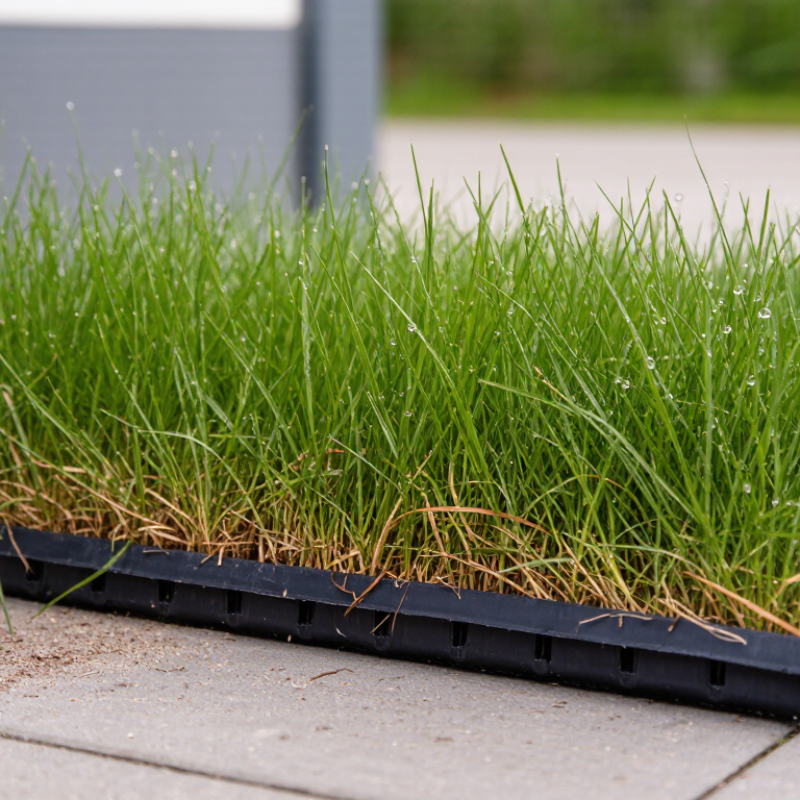
A grass floor mat usually combines artificial turf, natural fibers, and a backing layer. The top surface imitates grass with short plastic blades, often made from polyethylene or polypropylene. It traps dust beneath the foot instead of spreading it across the room. Natural-fiber versions use coir, sisal, or seagrass. These fibers feel rougher and scrape soil from shoe soles effectively. The backing provides stability, limits curling, and helps moisture drain. Some designs use rubber or thermoplastic layers, while others use latex-coated fabric.
The market is expanding. Grand View Research valued the global artificial turf market at approximately US$3.5 billion in 2023. That growth reflects demand for low-maintenance surfaces, but market growth does not prove every product performs well. A dense pile may capture more debris, yet it can dry slowly after rain. Natural fibers can feel warmer and more tactile, but they may shed or weaken in constant moisture. No mat is perfect. Installation conditions matter more than many product descriptions admit.
Tips: Check the backing before buying. Place the mat on a flat, clean surface. Measure the doorway first. Shake or vacuum it weekly, then dry it fully after washing. For outdoor use, inspect drainage holes and edge seals. A practical test is simple: walk across it with dusty shoes and check whether grit remains on the floor.
A grass floor mat uses upright grass-like fibers to trap soil before it reaches indoor flooring. Its pile height, usually measured from the backing to the fiber tips, changes how the mat feels and performs. A 10 mm pile feels firm and practical under shoes. It suits busy entrances, narrow hallways, and areas needing frequent vacuuming. Dirt remains close to the surface, where brushing can remove it efficiently.
At 20–30 mm, the fibers provide more cushioning and a softer step. This height can capture larger particles, such as dry leaves and grit, between the strands. However, the deeper pile may hide fine dust. Cleaning takes longer. A vacuum may need several passes, while shaking can release trapped debris outdoors. In my experience, damp fibers also stay compressed longer at this height. That detail is easy to underestimate.
A 40 mm pile feels plush and absorbs more impact, but it demands more care. Long fibers can bend under repeated foot traffic and hold moisture near the backing. Cleaning gets harder. The mat may need slow vacuuming, occasional combing, and complete drying. Pile height alone does not guarantee better dirt capture. Fiber density, stiffness, drainage, and backing design matter just as much. A dense 20 mm mat may outperform a loose 40 mm mat in a wet entrance. The best choice depends on traffic, weather, and cleaning habits, not appearance alone.
A grass floor mat combines synthetic or natural-looking blades with a perforated backing. The blades trap soil and moisture. The backing lets water pass through instead of pooling beneath the mat.
The key measurement is often litres per square metre per minute, written as L/m²/min. It describes drainage capacity under stated test conditions. For context, 100 millimetres of rain per hour equals about 1.67 L/m²/min. NOAA Atlas 14 rainfall-frequency data shows that local storm intensities can vary sharply. A mat rated at 5 L/m²/min may therefore handle ordinary rainfall, but site conditions still matter. Test pressure, water temperature, mat angle, and backing cleanliness can change the result.
Perforations control the pathway. Larger holes usually increase flow, while closer spacing spreads discharge more evenly. However, an open backing can allow grit to enter and reduce performance. ASTM D4491/D4491M evaluates water permeability for geotextile materials, but mat ratings may use different laboratory methods. Direct comparisons can be misleading. I have seen high ratings tested with clean water and a new sample. Real entrances are less forgiving. Wet leaves, compacted dirt, and an uneven floor can slow drainage.
Check the test report, not only the headline number. Look for flow direction, sample size, pressure, and blockage testing. A practical specification should also state whether the rating is measured horizontally or vertically. That detail is easy to miss.
What Is a Grass Floor Mat and How Does It Work?
How UV Exposure and EN 15330-1 Abrasion Criteria Shape Mat Durability
A grass floor mat combines synthetic blades, a backing layer, and often drainage openings. It traps loose dirt beneath shoes and creates a softer walking surface. Some mats sit at entrances, while others cover balconies, patios, or display areas. Their performance depends on construction, not appearance alone. Dense fibers may feel comfortable, but poor backing can curl at the edges.
Sunlight is a quiet source of damage. Ultraviolet radiation can fade fibers, weaken polymer strands, and make the backing brittle. A mat beside a bright glass door may age faster than one under shade. UV stabilizers can slow this process, but they cannot stop it completely. Rotate exposed mats when practical. Inspect faded areas, lifted edges, and cracking.
Abrasion is equally important in busy locations. EN 15330-1 establishes performance requirements and test methods for certain synthetic turf surfaces, including resistance to wear under repeated use. It is not a universal guarantee for every grass mat. The product’s intended application and test classification still matter. Look for documented test results rather than vague durability claims. Check high-contact zones, especially entrances and turning points. Replace a damaged section early. That sounds obvious, yet it is often ignored. A practical review should include fiber loss, surface flattening, seam movement, and backing separation. Even a well-tested mat can fail when cleaned aggressively or dragged across rough concrete.
| Performance Dimension | Typical Data or Requirement | How It Affects Grass Floor Mat Performance |
|---|---|---|
| Basic Construction | Synthetic grass fibres tufted or woven into a primary backing, usually with a stabilising secondary backing | The fibres create the grass-like surface, while the backing holds the tufts in position and provides dimensional stability during repeated use. |
| Common Fibre Materials | Polyethylene, polypropylene, or polyamide; fibre shape may be flat, curled, ribbed, or fibrillated | Polyethylene is commonly selected for a softer surface, polypropylene can support economical short-pile designs, and polyamide generally offers high resilience and wear resistance. |
| Pile Height | Approximately 5–25 mm for many entrance, balcony, patio, and utility mat applications | Shorter piles are easier to clean and tend to remain more stable under foot traffic. Taller piles provide a fuller appearance but may flatten more readily without adequate recovery. |
| Primary Function | Surface protection, dirt scraping, decorative coverage, moisture management, and light impact cushioning | A grass floor mat is not simply decorative turf: its fibre density, backing, drainage design, and underside grip determine how effectively it performs as a floor covering. |
| Backing and Dimensional Stability | Latex, polyurethane, thermoplastic, or similar stabilising backing systems; product construction varies | A stable backing helps reduce tuft movement, edge curling, shrinkage, and dimensional distortion caused by handling, temperature changes, or repeated loading. |
| Drainage Design | Perforated or open backing for outdoor drainage; closed or partially closed backing for indoor applications | Open drainage helps water pass through after rain or washing. Indoor mats require a suitable floor surface and should not retain moisture against wood, laminate, or other moisture-sensitive flooring. |
| Slip-Resistance Consideration | The underside should remain stable on the intended floor and be compatible with the relevant flooring material | A non-slip or high-friction backing can reduce movement, but performance depends on dust, water, floor finish, contact pressure, and whether the mat lies flat. |
| UV Exposure Mechanism | Ultraviolet radiation can break down polymer chains, pigments, and backing materials over time | Outdoor sunlight may cause colour fading, fibre embrittlement, loss of tensile strength, and backing deterioration. UV stabilisers and weather-resistant pigments can slow these effects but cannot eliminate them. |
| UV-Durability Evaluation | Typically assessed using controlled accelerated weathering or outdoor exposure methods; the exact method and acceptance level must be stated by the applicable specification | A UV test result is meaningful only when the exposure method, irradiance or radiant dose, moisture cycle, temperature, exposure duration, and measured property change are reported together. |
| Colour-Fastness Indicator | Often reported with a recognised blue-wool or grey-scale rating, depending on the test method used | A higher retained colour rating generally indicates better resistance to visible fading, but colour retention alone does not prove that the fibres or backing will maintain their mechanical strength. |
| Abrasion Relevance | Foot traffic, wheeled loads, dragging, grit, and repeated cleaning can remove or deform fibres | Abrasion resistance affects pile loss, fraying, fibre sheen, exposed backing, and the mat’s ability to maintain its appearance and function over repeated-use cycles. |
| EN 15330-1 Context | EN 15330-1 specifies requirements and test methods for synthetic turf surfaces used primarily for sports applications | Its abrasion-related criteria can provide a relevant benchmark for synthetic grass durability, but a general-purpose floor mat should not automatically be described as compliant unless the complete product, test method, and declared application meet the standard. |
| EN 15330-1 Abrasion Assessment | Results should identify the prescribed test procedure, test conditions, number of cycles, specimen construction, and measured changes | Abrasion performance cannot be judged from a cycle number alone. Fibre type, pile height, tuft density, infill or surface treatment, backing, and conditioning can significantly influence the result. |
| Pile Recovery | Depends on fibre polymer, cross-sectional profile, pile height, tuft density, and load duration | Resilient fibres and suitable profiles recover more effectively after compression. Permanent flattening may occur when heavy furniture, carts, or concentrated loads remain in one position. |
| Cleaning and Grit Control | Regular vacuuming, brushing, shaking, or low-pressure rinsing as permitted by the product construction | Sand and grit act as abrasive particles. Removing them reduces internal wear, helps preserve pile alignment, and can extend the useful appearance of the mat. |
| Temperature and Moisture Effects | Polymer expansion, contraction, moisture retention, and freeze-thaw exposure vary with material and backing design | Outdoor mats need adequate drainage and weather-compatible backing. Trapped moisture can contribute to odour, staining, biological growth, or deterioration of the supporting floor. |
| Expected Service Life | No universal service-life value; depends on traffic intensity, sunlight, climate, maintenance, installation, and product construction | A realistic durability statement should be based on declared test data and the intended use environment rather than a fixed number of years applied to every grass mat. |
| Most Important Selection Data | Fibre material, pile height, tuft density, backing type, drainage, UV test details, abrasion test details, and installation conditions | Reviewing these parameters together gives a more reliable indication of durability than appearance, fibre length, or a general claim such as “UV resistant” or “heavy duty.” |
A grass floor mat usually combines a textured surface with a flexible backing. It may resemble lawn, but its safety depends on more than appearance. Underfoot, the fibers scrape away dirt and add traction. The backing helps the mat stay stable on tile, concrete, or wood. However, loose edges can still create a trip hazard.
ASTM F1292 is important when the mat is used beneath playground equipment or fall-prone areas. This standard measures impact attenuation, including head injury risk during a fall. It does not automatically certify every grass mat for every location. Check the product’s test report, tested thickness, and installation conditions. Fire performance also matters indoors and near buildings. Look for documented flame-spread or fire-test results that match local requirements. A dry mat may grip well, while moisture, mud, or algae can reduce slip resistance sharply. Cleaning is part of safety, not an optional chore.
Tips: Press the mat edges after installation. Watch for curling, gaps, and soft spots. Test it after rain or washing. Ask whether ASTM F1292 testing covers the complete system, not only the surface layer. I have found that attractive mats often encourage overconfidence. That is worth questioning. Use a firm, level base, secure the perimeter, and replace damaged backing before someone falls.
It feels firm under shoes and suits busy entrances or narrow hallways. Dirt stays near the surface.
The mat feels softer and captures leaves, grit, and larger particles between the fibers. Cleaning may take longer.
No. A dense 20 mm mat can capture dirt better than a loose 40 mm mat.
Fine dust may hide below the surface. A vacuum might need several passes.
Its fibers can remain compressed for longer. Complete drying is important.
Use slow vacuuming, occasional combing, and outdoor shaking when practical. Do not rush it.
Ultraviolet exposure can fade fibers, weaken strands, and make the backing brittle.
No. It provides requirements and test methods for certain synthetic turf surfaces. The test classification still matters.
Inspect entrances, turning points, flattened fibers, moving seams, and separated backing. Small damage can spread.
Yes. Aggressive cleaning and dragging may remove fibers or damage the backing. This is easy to overlook.
A Grass Floor Mat is a floor-covering system designed to provide a natural-looking surface while helping trap dirt, moisture, and debris. It may be made from artificial turf or natural fibers, supported by a backing layer that improves stability and protects the floor beneath. Pile height, commonly ranging from 10 to 40 mm, influences softness, appearance, cleaning effort, and the mat’s ability to capture dirt. Shorter piles are generally easier to maintain, while taller piles may offer greater comfort and a more lawn-like feel.
The backing also plays an important role in drainage. Perforated designs allow water to pass through, with flow ratings expressed in L/m²/min helping users compare performance. Durability depends on resistance to ultraviolet exposure and abrasion, including criteria described by EN 15330-1. For safer selection, buyers should also review impact protection under ASTM F1292 where relevant, fire behavior, and slip-resistance ratings. Together, these factors determine whether a Grass Floor Mat is suitable for indoor, outdoor, residential, or high-traffic use.
Yameiju