Green Grass Mats can make a storefront entrance, event floor, or rooftop feel more inviting. But the right choice depends on use, not color alone. Grand View Research estimated the global artificial turf market at about USD 7.89 billion in 2022 and projected continued growth through 2030. That figure covers artificial turf broadly, not Green Grass Mats specifically. Still, it signals a market where buyers should compare product details carefully.
Turfgrass scientist Dr. James B. Beard described turfgrass as “the most important plant in the world.” His remark concerns living turf, not synthetic mats, but it points to a useful principle: ground surfaces affect how people use a space. For a business, check pile height, backing, drainage, edge finish, cleaning needs, and expected foot traffic. Picture muddy shoes crossing a café threshold, or display stands pressing into a thin mat. Those details matter more than a showroom photo.
A dependable comparison starts with the installation site and daily workload. Ask suppliers for product specifications, maintenance instructions, and samples you can inspect under your own lighting. Small checks help. Look closely at seams and backing. One limitation deserves attention: market growth does not prove that every mat is durable or suitable for your setting. Green Grass Mats should be assessed against practical needs, not promotional claims alone.
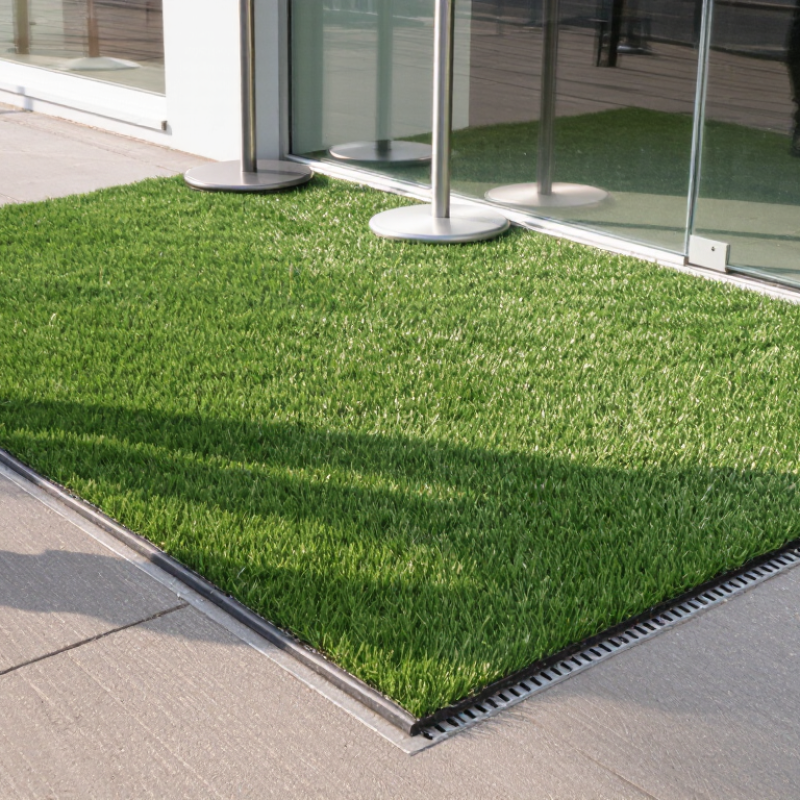
Green grass mats give businesses a quick way to add a lawn-like surface without growing or mowing grass. Retailers use them for seasonal displays, while cafés, hotels, and event venues use them for photo areas, patio accents, or temporary walkways. They can also soften the look of a trade-show booth. The setting matters. A mat that works beneath indoor display shelves may become slippery or worn when exposed to rain and frequent foot traffic.
Grand View Research estimated the global artificial turf market at USD 4.4 billion in 2022 and forecast 6.3% annual growth from 2023 to 2030. That report covers a broader market than green grass mats alone, so it signals commercial interest, not guaranteed demand for any one product. For selection, compare pile height, backing, drainage, edge finish, and cleaning requirements. A short, dense pile is often easier to roll carts over; a thicker pile can look softer but trap debris. Check fire-performance documentation for indoor installations, and request a sample. Photos hide texture. Test it under your actual lighting and footwear. I would also question how often the surface needs cleaning; estimates from a supplier may not match a busy entrance.
| Mat Type | Typical Construction | Suitable Business Uses | Key Benefits | Important Considerations | Best Selection Criteria |
|---|---|---|---|---|---|
| Artificial grass entrance mat | Synthetic grass-like pile attached to a backing, often with a nonslip surface | Shop entrances, office lobbies, reception areas, and covered walkways | Adds a green appearance and can help scrape loose dirt from footwear | Performance depends on pile construction, backing, drainage, and how frequently the mat is cleaned | Check dimensions, edge finish, backing grip, cleaning instructions, and suitability for the expected foot traffic |
| Drainage grass mat | Open-grid or perforated material that allows water to pass through | Outdoor event areas, patios, poolside routes, and temporary walkways | Allows water to drain rather than remain on a fully solid surface | Subfloor condition, drainage capacity, and slip resistance matter; it does not replace proper site drainage | Choose a design suited to the surface and exposure, and confirm how it should be secured and maintained |
| Temporary event grass mat | Rolls or interlocking sections with a grass-like upper surface | Exhibitions, outdoor hospitality, pop-up retail, and event paths | Can create a consistent green floor covering over suitable prepared surfaces | Heavy loads, repeated use, wet conditions, and uneven ground may affect stability and appearance | Consider installation time, joining method, storage, expected event duration, and pedestrian or equipment traffic |
| Balcony or patio grass mat | Flexible synthetic turf-style surface, usually supplied in rolls or cut-to-size pieces | Commercial terraces, café seating areas, and staff break spaces | Provides a softer, decorative surface without mowing or watering | Outdoor products can still retain heat or debris; ventilation and drainage beneath the mat are important | Measure the area carefully and check UV exposure guidance, backing type, drainage, and cleaning requirements |
| Interlocking grass tiles | Modular tiles with a grass-like top and connecting edges | Small display zones, temporary installations, and areas requiring replaceable sections | Individual sections can be installed or replaced without changing the entire surface | Connections may shift if the base is uneven or the product is not secured as intended | Confirm tile dimensions, connector compatibility, base preparation, edge treatment, and replacement availability |
| Heavy-duty outdoor grass mat | Artificial turf-style pile combined with a more robust backing | Commercial outdoor spaces with regular pedestrian use | Designed for repeated use and can provide a consistent decorative finish | “Heavy-duty” is not a universal performance standard; product specifications should be compared directly | Review pile and backing details, stated use conditions, warranty terms, cleaning method, and expected traffic level |
| Decorative display grass mat | Short synthetic pile intended primarily for visual presentation | Product displays, window dressing, photo areas, and promotional stands | Creates a green backdrop that can be cut or arranged for display layouts | Decorative products may not be designed for regular walking, outdoor exposure, or heavy loads | Prioritize appearance and ease of trimming, and verify whether the mat is intended for indoor or outdoor use |
Selection tip: Match the mat to its location, traffic level, exposure to water and sunlight, cleaning routine, and installation surface. Check the supplier’s technical specifications before purchase, especially for slip resistance, drainage, fire performance, and load suitability.
They create lawn-like surfaces for displays, photo areas, patios, temporary walkways, and trade-show booths. No mowing needed.
Short, dense fibers are often easier for carts and frequent foot traffic. Thicker piles look softer but can trap dirt.
Polyethylene often feels softer underfoot. Polypropylene can suit firmer, budget-conscious uses. Compare resilience and density, not color alone.
Look for grip on the intended floor and drainage for spills or outdoor use. Check that the mat stays flat.
Ask for slip-resistance details, especially in wet areas. For indoor use, request fire-performance documentation. Test the mat on site.
No. Photos can mislead. Request a sample and check its texture under your lighting and footwear.
Check cut edges, seams, and loose fibers. Raised edges can catch shoes, while tall fibers may hold debris. Small details matter.
Ask for care instructions and test cleaning products on a small area. Supplier estimates may not reflect a busy entrance. A sample helps, though real traffic may change its look faster than expected.
Choosing Green Grass Mats for a business starts with understanding how they will be used, whether for walkways, event spaces, display areas, or other commercial settings. Consider the site’s surface, climate, foot traffic, drainage, and the appearance and performance you expect. These conditions help determine which materials, backing, pile construction, and safety features are appropriate.
Compare options for durability, slip resistance, comfort, and suitability for indoor or outdoor use. Also assess cleaning requirements, expected lifespan, and the full cost of ownership, including installation and replacement. Before purchasing, verify supplier quality and review product specifications, such as dimensions, material composition, and care guidance. Matching these factors to your business needs can help you select a practical, safe, and cost-effective mat solution.

 Yameiju