Choosing the best Grass Door Mat for global sourcing in 2026 requires more than comparing prices. Buyers must examine fiber quality, backing stability, drainage, packaging, and supplier consistency.
Industry consultant Robert M. Starck describes the purpose clearly: “The best entrance mat works quietly, before anyone notices the dirt.” This principle matters when evaluating grass-textured mats for homes, hotels, offices, and retail entrances. A convincing product should scrape dust from shoe soles without damaging flooring. It should also remain stable on tile, concrete, wood, and covered outdoor surfaces.
Details reveal quality.
Look closely at the pile. Dense polypropylene or recycled PET fibers can provide practical wear resistance. A flexible PVC or rubber backing may reduce slipping and moisture transfer. However, backing performance changes with temperature, sunlight, and repeated washing. Buyers should request test samples before placing large orders.
Global sourcing adds another layer. Confirm product dimensions, carton counts, private-label options, color consistency, and loading efficiency. Ask suppliers for material declarations and documented quality procedures. Do not rely only on polished catalog photographs.
The strongest Grass Door Mat may not be the cheapest option. It may reduce replacements, customer complaints, and freight waste over time. Still, this category has blind spots. “Eco-friendly” claims can be vague, and recycled content may lack independent verification.
A reliable sourcing decision combines touch testing, factory communication, and realistic cost analysis. The final choice should fit the market, climate, cleaning habits, and expected foot traffic. Perfect data is unlikely. Careful questioning remains essential.
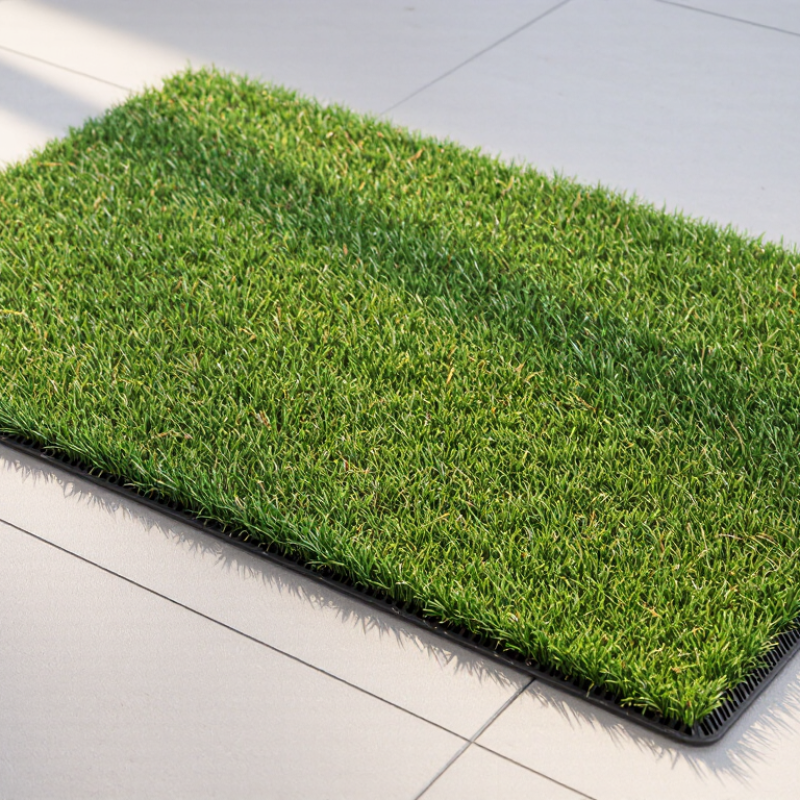
Grass Door Mats: Definition, Uses, and Key Types
Grass door mats are entry mats made from dried, woven plant fibers, valued for their natural texture and simple appearance. Depending on construction, the fibers may feel firm and slightly coarse underfoot. They help brush loose dust and grit from shoe soles before these reach indoor floors.
That is their main job.
Not deep cleaning. They work best in sheltered entrances, patios, or covered porches. Repeated soaking can cause wear, odors, or slow drying. Performance varies with fiber, weave, backing, and exposure. Small details matter.
Common types include plain woven grass mats, tightly woven versions, and mats with rubber or other non-slip backing. Open weaves can release debris readily and may dry faster, but can feel less stable on smooth floors. Dense weaves provide a firmer surface, though trapped grit may need shaking or brushing out.
Backed styles can reduce movement, but the backing may age differently from the natural-fiber face. When comparing samples, check dimensions, edge finishing, fiber consistency, and moisture tolerance. A mat that looks sturdy in a photo may still curl at the corners. Ask for real-use testing.
That step is easy to overlook.
Materials and Construction Features to Compare in 2026
For a grass door mat, compare the face material before judging color or pile height. Natural grass fibers can feel warm and textured, but they may vary in thickness and shade between batches. Synthetic grass usually offers more consistent color and easier cleaning, though its surface can feel less natural. Ask suppliers to identify fiber type, pile density, and backing material in writing.
Small details matter. Check the edges for loose fibers and uneven stitching. A woven mat should hold its shape when flexed; a tufted mat should resist shedding after repeated brushing. For outdoor use, inspect drainage gaps and ask how the backing handles moisture and sunlight. A dense pile may trap grit instead of releasing it. Thicker is not always better.
Compare samples under dry and damp conditions, then test them on the floor surface where buyers expect to use them. Look for curling corners, color transfer, and a backing that slips when pressed. Request dimensions, weight, and packing details, since these affect both handling and shipping volume. One sample cannot represent every production run, and that is an easy limitation to overlook. Ask how the supplier checks batch consistency before confirming specifications.
Performance Standards for Different Global Markets
For 2026 global sourcing, the best grass door mat must match local performance expectations, not just appearance. In wet European markets, specify tested slip resistance under EN 16165. Australia and New Zealand buyers often request AS/NZS 4586 classifications for pedestrian surfaces. North American importers may prefer ASTM-based friction, abrasion, and colorfastness testing. These details matter when mud, rain, and heavy footwear meet a smooth floor.
Material selection needs evidence. UNEP’s Global Resources Outlook 2024 warns that global material extraction could rise by 60% by 2060 without stronger efficiency measures. A sourcing team should request recycled-content verification, batch traceability, and chemical screening. For EU sales, check REACH requirements. For the United States, review applicable consumer-product and chemical rules. The details are easy to miss. We have seen green claims fail when suppliers could not provide test dates or material percentages. That weakness deserves honest review.
Tips: Ask for samples from three production batches. Test drainage after repeated soaking. Measure backing shrinkage after 24 hours. Check edge curling after heat exposure. Compare fiber recovery after 10,000 simulated steps. Choose low-odor backing and sealed edges for indoor use. Do not rely on one laboratory result; test the finished mat, packaging, and printed claims separately. WHO reports about 684,000 fatal falls globally each year, so a decorative surface cannot replace stable backing and verified slip performance.
How to Evaluate Manufacturers, Pricing, and Minimum Orders
2026 Best Grass Door Mat for Global Sourcing?
How to Evaluate Manufacturers, Pricing, and Minimum Orders
A reliable manufacturer should provide more than attractive product photos. Request physical samples showing pile height, fiber density, backing thickness, and edge finishing. Run a simple water test on a tiled floor. Check whether moisture drains quickly or stays trapped underneath. Ask for abrasion and colorfastness test records, especially for mats placed near busy entrances. Clear technical drawings also reveal whether the supplier understands production details.
Pricing needs a complete breakdown. Compare material cost, edge binding, packaging, inspection, and shipping terms. A low unit price may hide expensive tooling or oversized cartons. Ask for quotations at several quantities, such as 500, 1,000, and 5,000 pieces. Confirm whether prices change with custom colors or printed packaging. Small details matter. Request the quotation in writing, with a validity date and payment schedule.
Minimum order quantities deserve careful negotiation. Some factories set high MOQs because of raw material purchasing, while others use them to filter small buyers. Ask whether mixed sizes or colors can share one production run. Review factory capacity, lead times, quality controls, and previous export experience. A video call is useful, but an independent pre-shipment inspection is stronger evidence. I would not approve a large order from one sample alone. Samples can be unusually well made. That is an uncomfortable, but important, sourcing risk.
Customization, Compliance, Packaging, and Shipping Considerations
2026 Best Grass Door Mat for Global Sourcing?
A strong grass door mat should balance appearance, drainage, durability, and landed cost. Choose natural grass fibers or weather-resistant synthetic fibers according to the target market. Ask suppliers for fiber composition, backing details, edge construction, and production tolerances. A 40-by-60-centimeter sample can reveal curling, shedding, and uneven trimming. It is easy to overlook odor after sealed storage. That mistake can delay approval.
Customization should include size, color, logo placement, surface texture, and anti-slip backing. Confirm artwork with a physical pre-production sample, not only a digital file. Compliance requires clear material declarations, care instructions, packaging marks, and test reports suited to the destination country. Review flammability, chemical content, slip resistance, and recycled-material claims with qualified laboratories. Requirements differ across markets. Do not rely on an old report.
Tips: Keep one approved sample with every purchase order. Photograph the mat, carton, label, and pallet before loading. Use moisture barriers for humid routes, but avoid excessive plastic when recyclable packaging is requested. Cartons need corner protection and compression testing. Flat packing saves space, although tight rolling may create permanent waves. A trial shipment often exposes problems that factory inspections miss. Leave buffer time for port delays, customs review, and seasonal demand. Forecasting is never perfect; a modest safety stock can protect retail launches.
2026 Best Grass Door Mat for Global Sourcing
Indicative buyer planning priorities across customization, compliance, packaging, and shipping.
Compliance verification ranks highest because destination-market rules and documentation should be confirmed before production. Customization, packaging, and shipping plans also need early alignment to avoid changes, damage, or delays. Scores are indicative planning ratings on a 1–5 scale, not audited market statistics.
FAQS
Ask for the fiber type, pile density, and backing material in writing. Natural fibers can vary in shade and thickness. Synthetic fibers are often easier to clean. Neither option is perfect.
Inspect the edges for loose fibers and uneven stitching. Flex the mat and check whether it keeps its shape. Brush a tufted sample several times. Watch for shedding.
Test it dry and damp on the intended floor. Press the backing to check for slipping, and look for curling corners or color transfer. One sample may not reflect a full production run.
Check for drainage gaps and ask how the backing handles moisture and sunlight. A thick pile can trap grit. Thicker is not always better.
Request written quotes at several quantities, such as 500, 1,000, and 5,000 pieces. Compare materials, edge binding, packaging, inspection, and shipping terms. A low unit price can hide extra costs.
Ask whether different sizes or colors can share one production run. Review capacity, lead time, quality checks, and export experience. I would not commit to a large order after seeing one sample.
Confirm size, color, logo placement, surface texture, and backing details. Approve a physical pre-production sample. Request material declarations, care instructions, and relevant test reports for the destination market.
Check carton protection and compression testing. Flat packing saves space, but tight rolling may leave permanent waves. Photograph the mat, carton, label, and pallet before loading. Leave extra time for delays.
Conclusion
Choosing the best Grass Door Mat for global sourcing in 2026 requires more than comparing appearance and price. This guide explains what grass door mats are, where they are used, and how tufted, woven, ribbed, and synthetic-grass designs differ. It also reviews key material and construction features, including fiber durability, backing quality, drainage, slip resistance, weather tolerance, stain resistance, and ease of cleaning. These factors should be matched to the performance expectations of different markets, climates, and commercial or residential applications.
The guide also outlines how to evaluate manufacturers through production capability, quality control, pricing transparency, minimum order quantities, lead times, and sampling procedures. Buyers will learn how customization, color, size, labeling, compliance documentation, packaging efficiency, container loading, and shipping conditions can affect total sourcing cost and product consistency. By assessing both technical performance and supply-chain reliability, importers can select a Grass Door Mat that delivers practical value, dependable quality, and smooth international distribution.

 Yameiju